


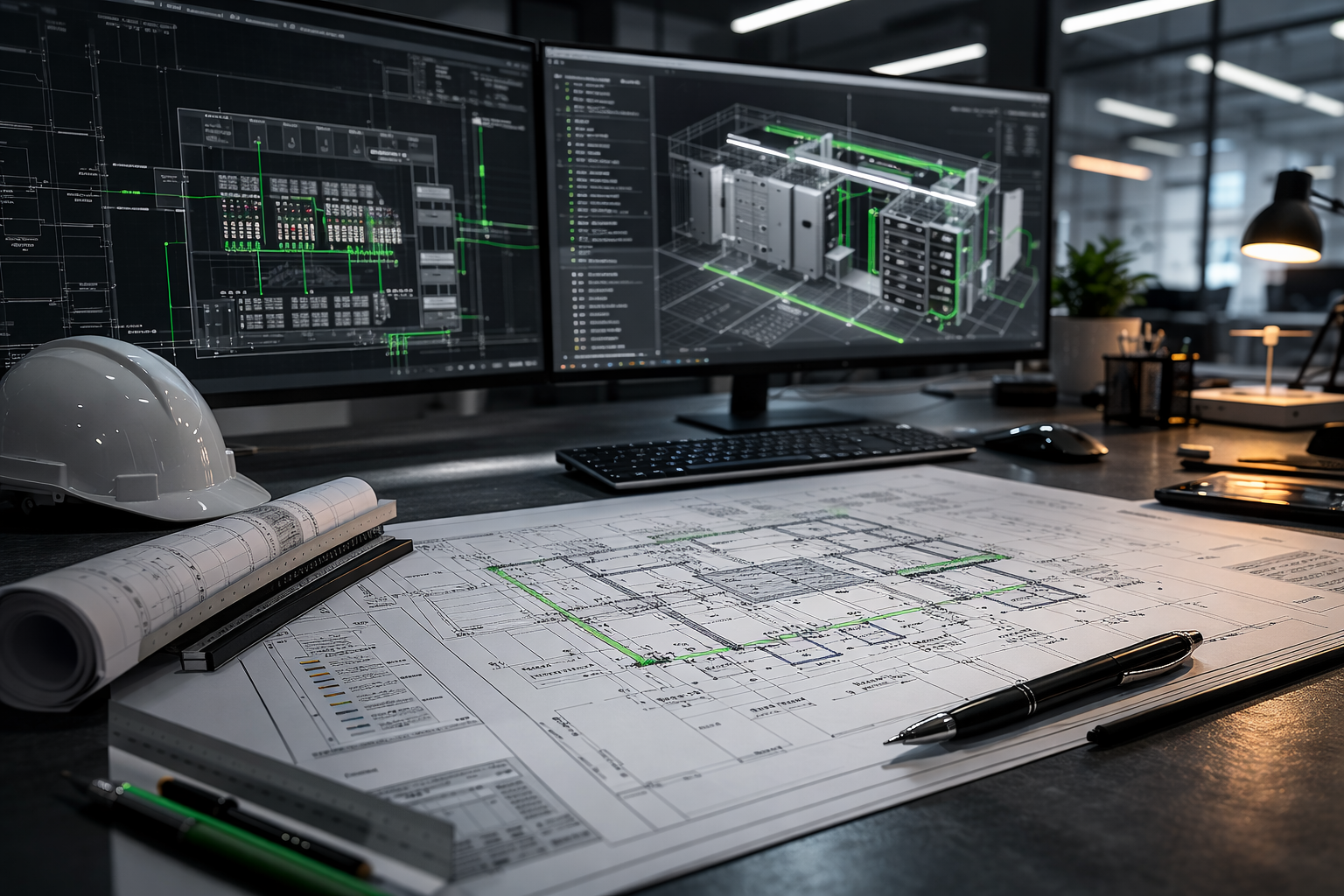
With our modular planning in electrical engineering, we pursue a consistently structured approach: Instead of individual, piecemeal planning, we break down complex electrical systems into clearly defined, functional modules. These are technically sophisticated, standardized in design, and yet flexibly adaptable – tailored to the specific requirements of your project.
Essentially, this means that recurring systems such as energy distribution, lighting units, security systems, or communication structures are not "reinvented" every time, but rather planned based on proven concepts and further developed for each specific project. This results in significantly higher planning quality while simultaneously reducing effort.
A key advantage lies in the clear structure. Each module has defined interfaces, unambiguous functions, and coordinated scopes of work. This not only simplifies planning but, above all, coordination with other trades. Sources of error are minimized, collisions are reduced, and processes on the construction site are significantly simplified.
By using BIM-based planning methods, we link these modules with intelligent, data-driven models. This creates digital system components that contain all relevant information – from technical parameters and quantities to cost and maintenance data. This data can be used throughout the entire lifecycle, from planning and execution to operation.
Our modular planning includes, among other things:
- Energy distribution systems and sub-distribution systems as standardized system components
- Lighting concepts with defined luminaire and control modules
- Security systems such as fire alarm systems, public address systems, public address systems or burglar alarm systems
- Communication and data networks with clearly structured distribution systems
- Building automation solutions with coordinated functional modules
A common mistake in practice is that "modular planning" is understood merely as a repetition of details – without a clear system or consistent structure. This leads to inconsistent solutions, difficult interfaces, and high coordination costs.
We deliberately take a different approach: Our modules are holistically designed, technically coordinated, and consistently documented. They are built to function reliably on the construction site – with clear assembly instructions, defined connection concepts, and traceable processes.
The result is scalable and cost-effective electrical planning that particularly shines in complex projects – such as hospitals, office buildings, industrial plants, or educational institutions. Planning and construction times are reduced, quality increases, and costs remain transparent and controllable.
In this way, we create electrotechnical systems that not only impress in the plan, but also function sustainably in implementation and operation.